
Key points
- What a tree shows you before it fails
- Role of a Local Tree Surgeon
- Sign 1: Trees Showing Visible Damage
- Sign 2: Unusual Growth Patterns
- Sign 3: Pest Infestation Indicators
- Sign 4: Fungal Growth
- Sign 5: Changes in Soil Moisture
- Sign 6: Safety Hazards
- Sign 7: Required Tree Services
- How quickly to act
- Finding a Qualified Tree Surgeon in the UK
Trees fail slowly, then suddenly. The signs are there months before the branch drops or the tree comes down. This guide covers the seven warning signs that mean you should call a local tree surgeon, and what each one actually looks like on the ground.
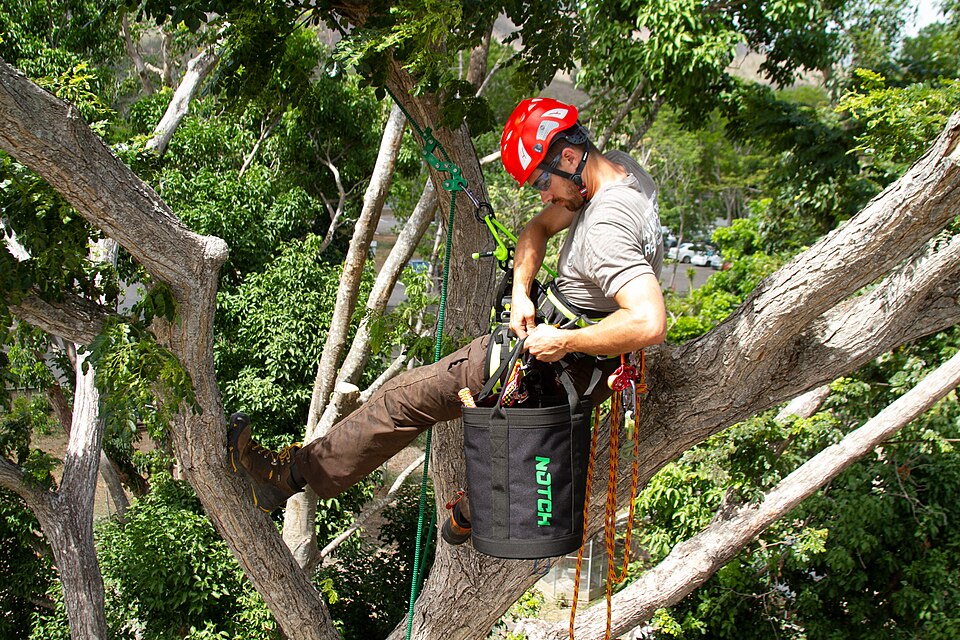
What a tree shows you before it fails
A tree on your property is a long-term asset. It shades the house, screens the neighbours and holds the soil together. It’s also a large, heavy structure that’s alive and constantly changing. When its health slips, the tree doesn’t announce it. It shows small signs first: a crack here, a dead branch there, a lean that wasn’t there last year.
A ground-level inspection is often the right first step for a visible concern. It records what can be seen and whether the location or target makes it urgent. It does not diagnose every defect or guarantee that a tree is safe. If something may fail soon or threatens people or property, use our emergency tree work service. For a planned assessment, see tree safety inspections.
Role of a Local Tree Surgeon
A local tree surgeon is the person who reads those signs. A ground-level inspection records what is visible, the condition of the stem and base, and what sits beneath the tree. Where that leaves a question unanswered, closer inspection or specialist investigation is scoped and quoted separately, rather than being assumed. That inspection is the core of the job, and it’s why the trade exists. Anyone can cut a branch. Reading a tree takes training and experience.
We’re Ross Webster Tree Services. We work across North Yorkshire and County Durham. NPTC and LANTRA qualified, £10 million insured, and we quote from a site visit rather than from a photo.
On that visit, the useful question isn’t simply whether a tree looks untidy. We check where the defect sits, what could be struck if it failed, whether access changes the work plan and whether a reduction can retain the tree safely. That’s how we separate routine maintenance from work that shouldn’t wait.
Sign 1: Trees Showing Visible Damage
Cracks and Splits
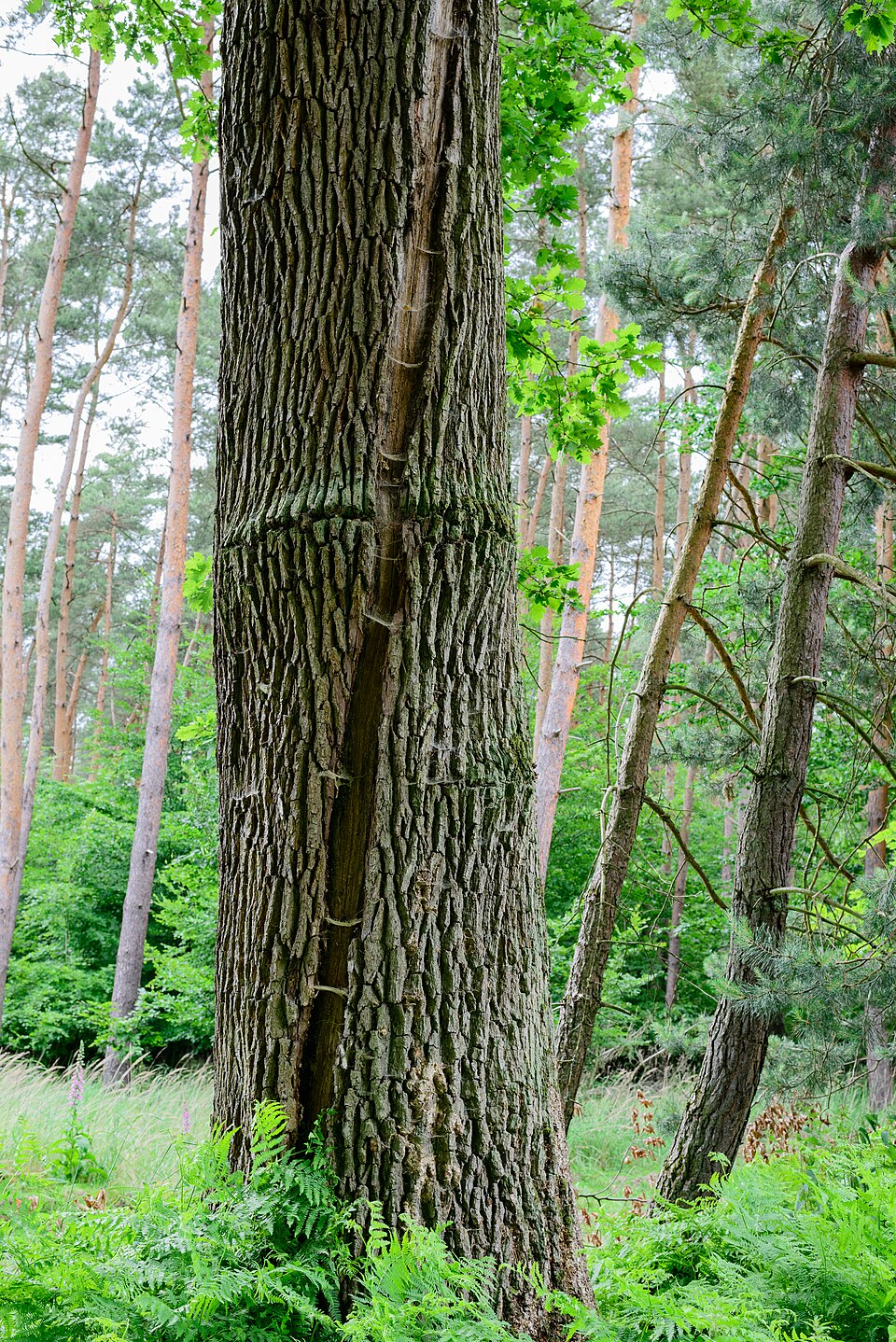
A crack in the trunk or a major limb is the most obvious warning sign. Not every crack is critical. A shallow split in the bark can heal. A deep crack that runs with the grain of the trunk, or a split where a fork is opening and closing, is structural failure in progress.
Look for cracks that are widening, that weep sap, or that appear at a junction where two large branches meet. These are the points where trees fail in storms. If you can see daylight through a crack, treat it as urgent and get it assessed.
Dead Branches
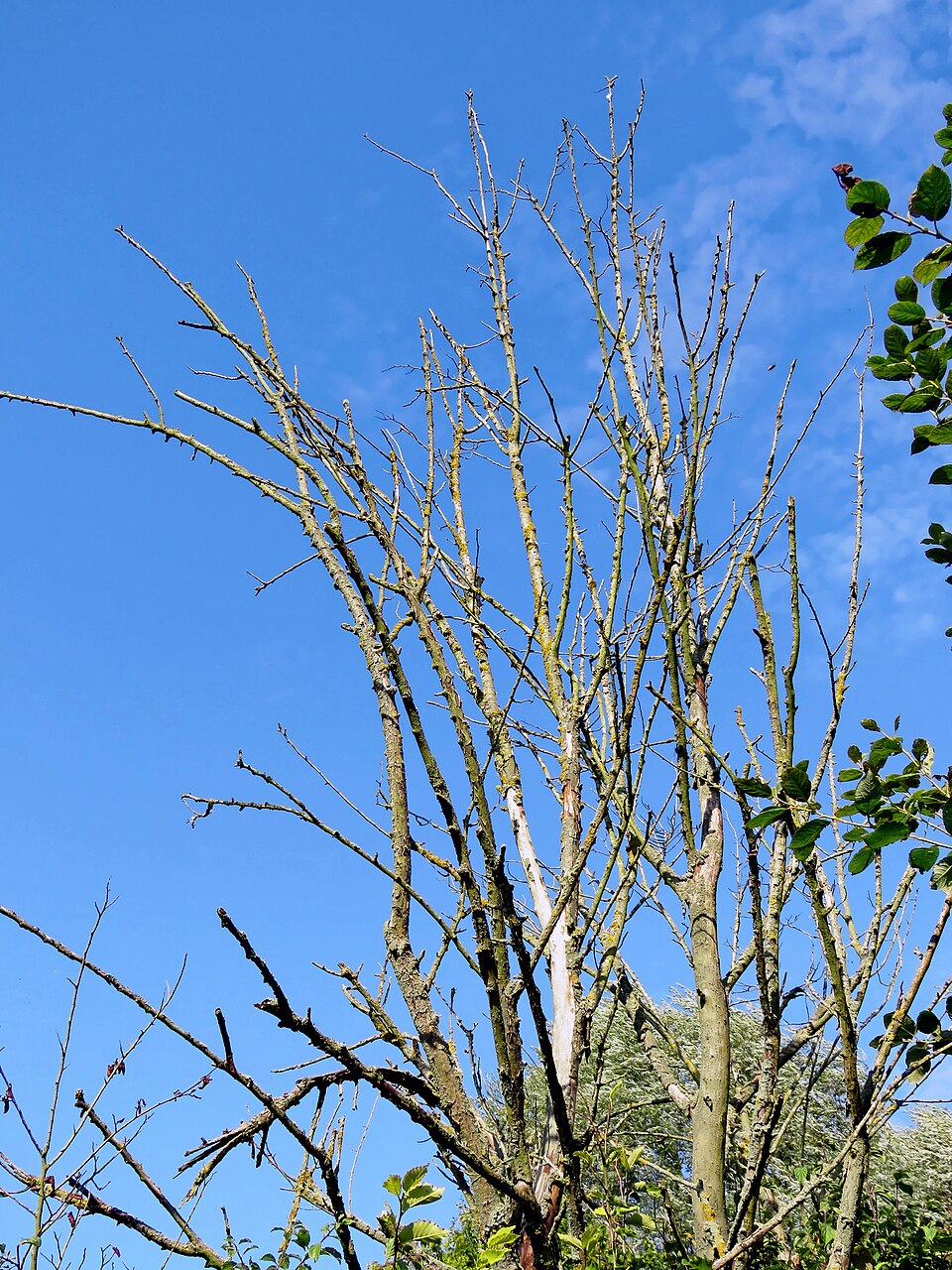
A dead branch is one with no leaves in season and bark that has started to peel. One or two dead branches high in the crown is normal ageing. A cluster of them, or branches dying back from the tips across the whole tree, points to something wrong at the roots or in the trunk.
Dead branches aren’t just a health sign. They’re the ones that fall on cars, fences and people. They come down without warning because the wood has dried and the attachment has failed. If you have dead branches over a path, a drive or a garden you use, get them removed.
Sign 2: Unusual Growth Patterns
Leaning Trees
Most trees lean slightly. A tree that has always leaned with the wind is fine. A tree that has started leaning recently is a red flag. The movement means the roots are losing their grip, usually because of soil changes, root damage or decay.
Check the base. If the soil is lifting on one side, or there’s a gap between the trunk and the ground on the other, the root plate is moving. That tree is a candidate for removal or for a serious reduction, and it needs a professional opinion before winter storms.
Overgrowth and Crowded Canopy
A crown that has become dense and crowded isn’t a health emergency on its own, but it’s a sign the tree has been left alone too long. Branches cross and rub, wounds open where they touch, and the weight in the crown grows every year.
Crown thinning opens the canopy and lets wind pass through instead of pushing against a solid sail. Left unmanaged, a crowded crown makes a tree top-heavy and more likely to fail in high winds. A local tree surgeon can thin it safely, cutting to BS3998 standard.
Sign 3: Pest Infestation Indicators
Common tree pests to look for
Look for the evidence rather than the insect itself. Small round holes in the bark, piles of fine sawdust at the base, or frass in the bark crevices point to wood-boring insects. Aphids show as sticky honeydew on leaves and a sooty mould underneath.
On conifers, watch for adelgid, which leaves white waxy deposits. On broadleaf trees, look for scale insects and caterpillars that strip the canopy in a matter of weeks. None of these is automatically fatal, but all of them stress the tree and leave it open to secondary disease.
Why a pest problem rarely stays small
Pests rarely kill a tree on their own. They weaken it. A tree under attack from insects has less energy to seal wounds, grow new wood and defend against fungi. The combination is what kills trees: a pest problem opens the door, and a fungus walks through it.
If you see signs of infestation on a tree you want to keep, get it inspected. Some infestations are treatable if caught early. The same infestation left for a season can turn a recoverable tree into a removal job.
Sign 4: Fungal Growth
What fungus on the trunk tells you
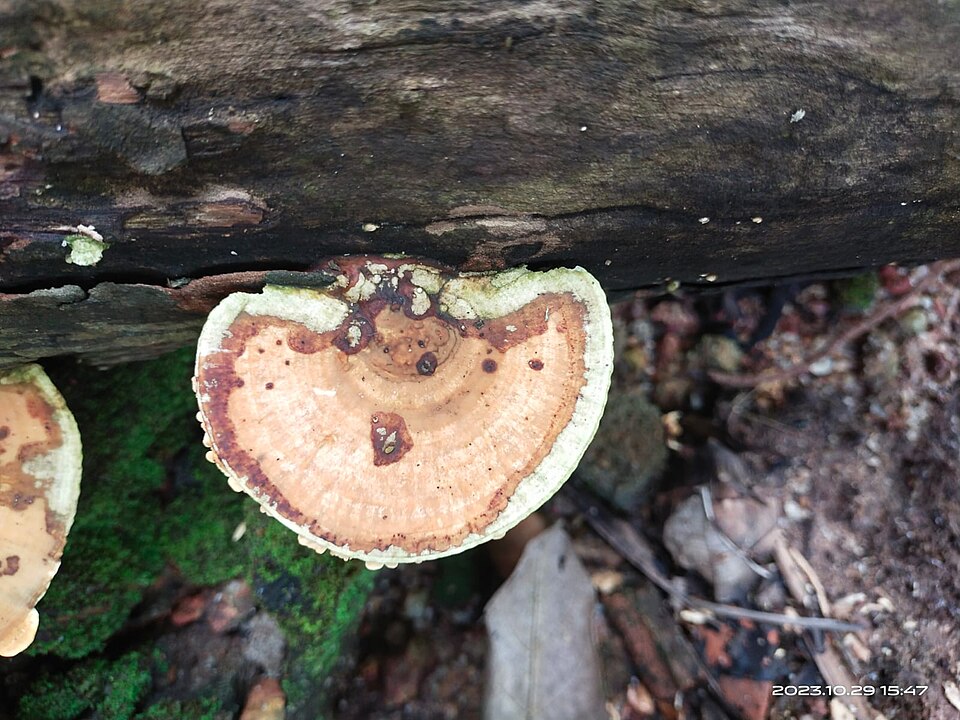
Mushrooms or brackets growing on the trunk or at the base of the tree are never good news. Some fungi, like the bracket fungus on beech and oak, are a direct sign that the heartwood is decaying. Others, like honey fungus, spread through the roots and can travel between trees.
Not all fungi are the same. A toadstool in the grass near the tree is different from a bracket on the trunk. But any fungus fruiting on the tree itself means decay is already established inside the wood, and the tree is weaker than it looks.
Decay and what it costs you
Decay inside the trunk or the roots removes the wood that holds the tree up. A tree can look healthy from the outside, with a full crown and green leaves, while the inside of the trunk is hollow. That’s why fungal growth is one of the most serious signs on this list.
If you find fungi on a tree close to your house, your drive or a path, don’t wait. A local tree surgeon will assess how much of the structural wood is left and tell you honestly whether the tree can stay, should be reduced, or has to come down.
Sign 5: Changes in Soil Moisture
Soil Erosion Around Roots
Roots need soil. When the soil around the base of a tree is washed away, dug out or compacted, the roots that anchor the tree lose their support. Look for exposed roots, soil washed downhill, or areas where building work has stripped the ground around a tree.
Root damage is often invisible until the tree starts to fail. Building work within the root protection area of a tree can sever or compact the roots without any obvious sign above ground. If you’ve had groundworks near a tree you want to keep, it’s worth an inspection.
Signs of Water Stress
A tree under water stress shows it in the leaves. Leaf scorch, where the edges of the leaves brown and curl, and early autumn colour in summer are both signs the tree can’t get enough water. This can be a seasonal blip, or it can be a root problem that’s getting worse.
Consistently dry soil around a tree, or soil that has been raised or lowered by a metre, changes how the tree takes up water. The tree adjusts by shedding branches. That shedding is what we see as dead wood in the crown, and it’s a sign to call in a professional.
Sign 6: Safety Hazards
Proximity to Structures
When a tree sits close to a building, the consequences of failure go up sharply. A branch that would land harmlessly on a lawn becomes a roof repair when it’s over a house. The same branch over a conservatory, a garden room or a boundary wall is a different risk entirely.
Proximity to structures isn’t a reason to remove a healthy tree. It’s a reason to inspect it. A local tree surgeon can reduce the overhang, remove the dead wood and leave the tree in place, which is what most people actually want.
Power Lines and Roads
A tree touching or overhanging power lines is a problem for the network operator, not for you to solve with a chainsaw. Contact the network first. In our area that’s Northern Powergrid, and they will arrange clearance work on the lines themselves.
Trees overhanging a road or a public footpath are the council's concern where the highway is involved, but the responsibility for the tree usually sits with the landowner. If a branch is already hanging low over a road, it’s an emergency. Get the road blocked off and call for help.
Sign 7: Required Tree Services
Tree Felling vs. Tree Maintenance
Most of the work we’re called for is maintenance, not felling. Pruning, crown reduction and deadwood removal keep a tree in place and healthy. Felling is the last resort, for trees that are dead, dangerous or in the way of a build.
If you’re unsure which one your tree needs, you don’t need to decide. We assess the tree and give you a straight answer. If a prune will do it, we say so. If the tree has to come down, we explain why, and we handle the permission checks where a Tree Preservation Order applies.
What to check before you book a tree surgeon
Tree work is one of the most dangerous trades in the country. The national careers service lists the qualifications a professional tree surgeon should hold: NPTC certificates in chainsaw operation and tree climbing, first aid, and a climbing qualification. Check those before you book anyone.
The same checks apply here in North Yorkshire and County Durham as anywhere else in the UK. Qualified tree surgeons work to British Standard 3998. They’re insured, they produce a method statement, and they quote from a site visit. Anyone who quotes blind from a photo, with no qualifications and no insurance, isn’t a tree surgeon. They’re a man with a chainsaw.
How quickly to act
The seven signs on this list aren’t a full tree inspection. They’re the things you can see from the ground without climbing the tree. If you spot one of them, act within the season. If you spot several, or one serious sign like fungal growth or a fresh lean, act within the week.
Tree work is cheaper and safer when it’s planned. A crown reduction scheduled in good weather costs less than a tree brought down in a storm. And a tree inspected while it’s healthy stays on your property, doing its job.
Finding a Qualified Tree Surgeon in the UK
Ask three questions before you book. Are you NPTC or LANTRA qualified? Are you insured, and can I see the certificate? Do you quote from a site visit? The answers sort the professionals from the rest, anywhere in the UK.
We’re Ross Webster Tree Services, and we answer yes to all three. We work across North Yorkshire and County Durham, we work to BS3998, and we give fixed quotes after visiting the site. Read more about when to prune trees, see why tree surgeons charge different prices, or check how long tree removal takes before you call. For the legal side, our guide to permission to prune trees covers Tree Preservation Orders, and tree removal cost explains what you’ll pay. The government's tree surgeon job profile sets out the qualifications you should expect.
Common questions
- What are the warning signs that a tree needs attention?
- Seven signs: visible damage like cracks or dead branches, unusual growth like a fresh lean or crowded canopy, pest infestation, fungal growth on the trunk or roots, changes in soil moisture around the base, safety hazards near structures or power lines, and a tree that needs services it hasn’t had in years. Any one of these is worth an inspection.
- How much does a tree inspection cost?
- Most tree surgeons quote from a site visit and include the inspection in the quote. We visit the site, assess the tree, and give a written price. If you only want an assessment and no work, ask for that when you book.
- How often should a tree be inspected?
- There’s no set interval. A ground-level walkover each year plus a professional inspection on a cycle that matches what sits beneath the trees is a common approach: usually annual for mature trees over buildings, car parks or public paths, and longer for field boundaries with no route through. After a storm, inspect trees over anything you value.
- Can a leaning tree be saved?
- Sometimes. A recent lean caused by soil changes or root damage may be managed with a reduction or by addressing the soil. A tree that has always leaned is usually fine. Only a site assessment can tell the difference, and a fresh lean near a building should be assessed quickly.
- What qualifications should a tree surgeon have?
- NPTC certificates in chainsaw operation and tree climbing, a first aid certificate, and insurance. Professional tree surgeons work to British Standard 3998, produce a method statement, and quote from a site visit. Ask to see the insurance certificate before booking.
Got a tree that needs work?
We review the situation. We give you a fixed quote. No hidden costs. What we quote, you pay.