Emergency Tree Removal and Storm Damage
Urgent tree work in North Yorkshire and County Durham for storm damage, dangerous trees and fallen hazards. Call to check availability and the next safe step.
Call 07423 269635 with the location and what has happened. Photos by WhatsApp or email help if they can be taken from a safe position. WhatsApp is not a monitored emergency channel, so call if the hazard is live.
What our customers say
“I was recommended Ross to cut down and trim a large conifer hedge.”
“He came out quickly after getting in contact to assess what needed doing and provide a quote.”
“Very professional and educated me what was the best way to do the job.”
“He was quick, efficient and did a great job of clearing away.”
“Will definitely be using again and recommending to others.”
- NPTC qualified
- LANTRA qualified
- £10M public liability insurance
- BS3998 standard
Urgent tree work, not routine maintenance
Emergency tree removal and make-safe work across North Yorkshire and County Durham, subject to safe access and availability. Call 07423 269635 with the location and what has happened so we can assess the enquiry and explain the next step.
Emergency tree work is for a dangerous tree, whether it is standing or fallen, that presents an immediate hazard: a hanging limb, split stem, storm-damaged crown, fallen trunk or tree leaning into a building, road, path or occupied area. Call us or send photos only if it is safe to do so. We triage the risk and decide what needs to happen first.
Urgency comes first whether the tree is still standing or has fallen. If a tree is touching a live cable, blocking a public road or creating an immediate public risk, keep clear and contact the utility provider or emergency services first. Do not approach for photos. Once the immediate risk is controlled, our fallen tree removal service covers the subsequent clearance, timber, waste and stump decisions.
When to call about a tree emergency
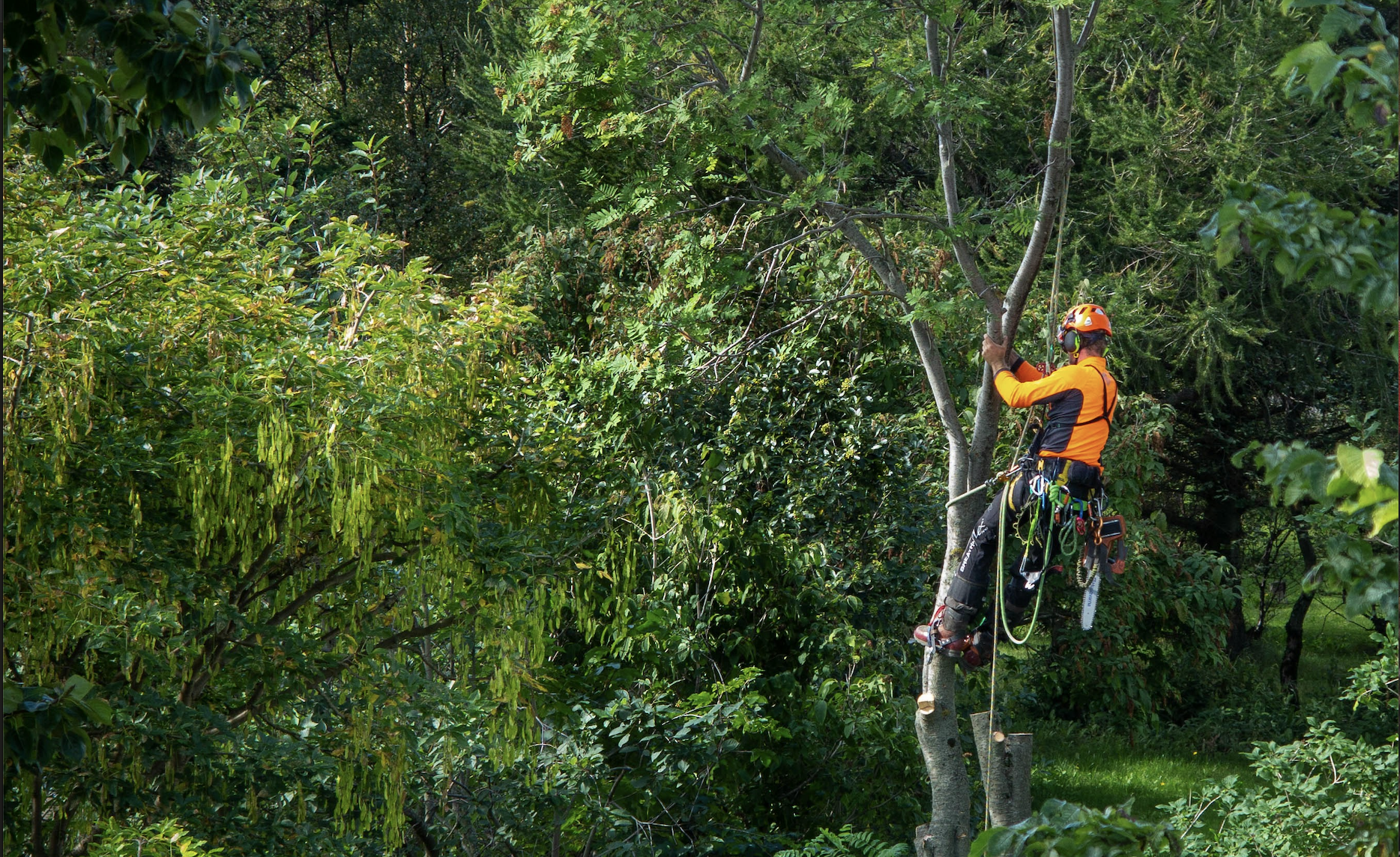
- Hanging or split limbs
- Branches caught in a crown, split at a union or suspended above a property, vehicle, path or road.
- Storm-damaged standing trees
- Root movement, a newly leaning tree, a split stem or major crown damage after high winds.
- Damage to structures
- Tree or limb contact with a roof, wall, fence, vehicle or access route where movement could make the situation worse.
- Immediate public risk
- Danger over a public path or road. Keep people away and tell us exactly what access is affected.
What can usually wait
A gradual lean with no soil movement, small dead branches over an open area, cracks with no recent movement and fungal brackets without other warning signs usually need a planned assessment or tree safety report, not an emergency call-out. Keep people clear and arrange advice before the condition changes.
What happens after your call
- Triage. We ask what happened, what remains standing, what is underneath and whether anyone is at risk.
- Make safe. The first objective is to remove or stabilise the immediate hazard using a controlled method.
- Clear and record. We agree what can be cleared immediately and what follow-up work, permissions or specialist input is needed.
- Plan the remainder. Tidy-up, stump grinding, pruning or full removal is quoted separately when it’s safe to do so. These are services we also provide. See our stump grinding, tree pruning and tree removal pages.
What's not included
Planned pruning, tidy-up beyond the make-safe scope and work involving live utilities before the utility provider is involved aren’t included in an emergency call-out.
Safety boundaries for emergency call-outs
Don’t stand below a hanging limb, approach a tensioned stem or cut a storm-damaged tree yourself. Keep people and vehicles outside the area. If electrical equipment or a live cable is involved, contact the utility provider or emergency services first and stay clear. A public road or footpath may also need the relevant authority or traffic control.
Call to check current availability. Attendance depends on the location, conditions, safe access and existing commitments. We will confirm what response is possible.
Tree fallen on a house, vehicle or access route
A tree resting on a roof, a car or a driveway is a live situation, and the order of what happens next matters more than the tree itself.
- Get people clear. Keep everyone out of the building, the vehicle and the area underneath the tree. Do not go back inside to move belongings or take photographs.
- Call 999 if there is danger to life, an injury, or a tree down across a road in use. If the tree or a limb has brought down or is touching an electricity line, stay well clear and call the electricity network on 105.
- Call us about the tree once people are safe. Tell us what the tree is resting on, whether anything is moving and how the access route is affected.
- Talk to your insurer about the damage and what they need. Tell us at the first call if a claim is involved so the record of the work can match it.
Do not attempt to cut a tree that is under tension, resting on a structure or holding another stem up. The loads in a fallen tree are not obvious from the outside, and the wrong cut can drop the whole thing.
Permissions, waste and insurance
We check Tree Preservation Orders and conservation-area restrictions where the situation allows. Emergency exemptions are limited to the work needed to remove an immediate risk, and the condition should be documented. The quote states what timber and green waste will be removed or left and whether stump work is included.
We carry £10 million public liability insurance and prepare a site-specific risk assessment and method statement for the work. If your insurer is involved, tell us at the first call so the records can match the claim.
Emergency tree work pricing
Urgency, time of day, tree condition, access, proximity to people or structures, equipment, traffic controls, waste volumes and follow-up work all affect the price. We give the clearest price possible after triage or a site assessment. Emergency make-safe work and later tidy-up may be separate stages.
Qualified and insured. NPTC and LANTRA qualified. £10M public liability insurance. Site-specific risk assessment and method statement. Call first if the risk is immediate.
What customers ask
Common questions
Do you provide a 24-hour emergency tree surgeon?
We prioritise immediate hazards according to risk, access, weather, daylight, equipment and current call-outs. Call with the location and details and we’ll tell you the next available safe response rather than promise a time we can’t keep.
What should I do while waiting?
Keep people and vehicles away, don’t stand under the tree or cut a tensioned limb, and contact the utility provider or emergency services first if electricity or a public road is involved.
Is a fallen tree emergency work?
It can be. If the fallen tree creates an immediate risk to people, property, a road, access route or utilities, call for emergency triage and keep clear. Once the risk is controlled, fallen tree removal covers the subsequent clearance and any stump work.
Can you make a dangerous tree safe first?
Yes. Triage and make-safe work come before secondary tidy-up where the site allows. We explain any follow-up removal, pruning or stump work separately.
How much does emergency tree work cost?
The price depends on the hazard, urgency, access, equipment, waste and any traffic or public controls. We assess the situation and provide a clear quote for the immediate scope.
Is a tree dangerous, fallen or standing?
Call 07423 269635 with the location and what has happened. Photos by WhatsApp or email help if they can be taken from a safe position. WhatsApp is not a monitored emergency channel, so call if the hazard is live.