
Key points
- What a tree safety inspection is for
- Who the duty of care falls on
- What a proportionate regime looks like on different sites
- Walkover check, formal inspection and full arboricultural survey
- What findings look like, and what they oblige you to do
- Records, and why the audit trail is the point
- How often, and what changes the interval
- What triggers an inspection outside the cycle
- What an inspection from us is and isn’t
What a tree safety inspection is for
A tree safety inspection is a recorded check on the condition of your trees and on what would be struck if one of them failed. It isn’t a tidy-up list and it isn’t a planning document. Its job is to show that whoever is responsible for the site looked at the trees, judged the risk and acted in proportion to it.
We carry out these inspections for facilities managers, schools, estates, farms, housing providers and landowners across North Yorkshire and County Durham. To commission a visit, see our tree safety inspections and reports service for the booking process, report scope and price factors. If you already hold a tree schedule or an older report, send it with the enquiry. If you hold nothing, the first visit becomes your baseline.
Who the duty of care falls on
In practice it falls on whoever occupies and controls the land. Ownership matters less than control. If your organisation manages the site, lets people onto it and can decide whether a branch comes off, the duty is yours.
Two general obligations sit behind that. The Occupiers' Liability Act 1957 requires an occupier to take such care as is reasonable to see that visitors are reasonably safe using the premises. Section 3 of the Health and Safety at Work etc. Act 1974 requires an organisation to conduct its undertaking so that, so far as is reasonably practicable, people who aren’t its employees aren’t exposed to risk. Neither one prescribes an inspection method, an interval or a form, and no statute does. The reference point the sector actually uses is the National Tree Safety Group guidance on trees and public safety, which is guidance rather than law.
The standard is reasonableness, not a guarantee
You aren’t required to make a tree incapable of failing. You’re required to do what a reasonable occupier would do about a foreseeable risk. That’s why it’s the regime rather than the single tree that gets examined after an incident: was there a system, was it followed, and was an obvious defect visible and left alone. It also means the honest answer to most questions here is that it depends on the site. A dead limb over a playground and the same limb over a stock field are one defect and two very different risks.
Trees on land you don’t fully control
Leases split this in ways no general rule settles. Grounds maintenance can sit with the landlord while daily occupation sits with the tenant, and plenty of leases say nothing about trees at all. Settle in writing who holds the trees before you commission an inspection, not after a limb comes down. If the defective tree belongs to a neighbour, put your concern to them in writing and keep the copy. Where a tree overhangs a public road or footpath, the highway authority has an interest too.
What a proportionate regime looks like on different sites
The useful unit isn’t the tree. It’s the zone. Divide the site by how many people and how much property sit within falling distance of the trees, then set the level of attention zone by zone. A school playground and a farm boundary get different regimes because what sits underneath them is different, not because one set of trees is better than the other.
Playgrounds, car parks and public paths
School gates, play areas, seating, bin stores, staff car parks, fire escape routes, any footpath the public uses. These take the closest attention and the shortest interval, because a failure here is very likely to strike something. On a school or nursery site the calendar matters as much as the interval: access is easiest in the holidays, so the inspection has to land early enough for the resulting work to be booked into one.
Field boundaries, woodland and low-occupancy land
Farm boundaries, hedgerow trees, woodland interiors, land behind a stock fence with no route through it. A hollow-trunked veteran in the middle of a field isn’t automatically a problem that needs solving. Recording it and leaving it alone can be the correct decision, and a report that says so is more credible than one that recommends work on everything. What we look at hardest on this kind of land is the edges: the trees nearest a road, a right of way, a yard or a building.
Walkover check, formal inspection and full arboricultural survey
- Walkover check
- A ground-level look by a competent member of your own team, following a set route: a new lean, a hanging limb, a large dead branch, fresh fungal brackets, soil lifting at the base. Recorded on a simple form or a dated photo log. It escalates concerns rather than diagnosing them, and it’s the cheapest useful thing most sites aren’t doing.
- Formal inspection
- A qualified arborist working through the tree stock systematically, recording condition alongside the target beneath each tree and specifying work with a priority and a timescale. This is the visit that produces the document you keep and the one most managed sites need on a cycle.
- Full arboricultural survey
- Every tree individually referenced, plotted against a plan and recorded with its own condition notes, recommendations and review date, so the site holds a live tree register rather than a snapshot. Where a ground-level inspection leaves an unanswered concern, closer inspection or specialist decay testing may be recommended and quoted separately. The price depends on the agreed scope and recording requirements. See our tree safety inspections and reports service.
Why a BS5837 survey isn’t a safety inspection
These two get confused constantly, usually because the site already holds a BS5837 report from a planning application. That survey is written for development. It grades trees by quality and retention value so a scheme can be designed around them, which is a different question from whether a tree is dangerous. Our explanation of what the BS5837 tree categories mean sets out what those grades actually describe. A category A tree can carry a hanging limb over your car park. If a BS5837 survey is all you hold, you have a planning document and no safety record.
What findings look like, and what they oblige you to do
A finding isn’t an instruction to remove a tree. It’s an observation, a judgement about what sits beneath it, and an action with a timescale attached. What it obliges you to do is either act on it or record a considered reason for not acting. An inspection you commission and then shelve is worse than no inspection, because it proves you knew.
Findings that put work in the diary
Deadwood above an occupied target. A limb hung up in a crown. A split at a major union. Decay at the base of a tree beside a footpath. A fresh lean with soil movement at the root plate. Each one comes back with a timescale, from make safe today through to within the season. Most of it resolves into ordinary tree work, and a good share of that’s deadwood removal or a measured crown reduction rather than a felling. Anything that has to be made safe the same day becomes emergency tree work.
Findings that go on the watch list
A bracket fungus on a tree with nothing underneath it. A minor included union high in a crown over a field. Early crown thinning on a tree that’s otherwise sound. These are recorded with a reason and a date to look again. The record of a decision not to act is worth as much in the file as the record of work carried out.
Records, and why the audit trail is the point
An inspection protects you only so far as it’s written down and can be produced later. Insurers ask at renewal. Loss adjusters ask after a claim. Procurement teams ask in the middle of a tender. The gap that causes trouble is almost never the inspection itself. It’s the six months between a recommendation and the work being done, with nothing in the file to explain the delay.
What a defensible file holds
A plan or list that identifies trees and groups by reference. The date of each inspection, who carried it out and what they were qualified to do. Findings and recommendations with priorities. Evidence that the work was completed, and when. A written reason for anything deferred, declined or pushed into a later budget year. Keep the superseded reports as well, because the previous one is what shows a defect was new rather than ignored.
How often, and what changes the interval
There is no single inspection interval suitable for every site. The appropriate cycle depends on tree condition, site use and the inspection findings. The table below gives starting points for discussion, not a fixed rule.
| Site character | Where we usually start |
|---|---|
| Mature trees over playgrounds, car parks and public paths | Annual formal inspection, with your own walkover checks in between |
| Managed grounds, moderate tree stock and moderate footfall | Formal inspection every one to two years |
| Field boundaries and woodland with no route through | Longer cycle, concentrated on the edges nearest people, roads and buildings |
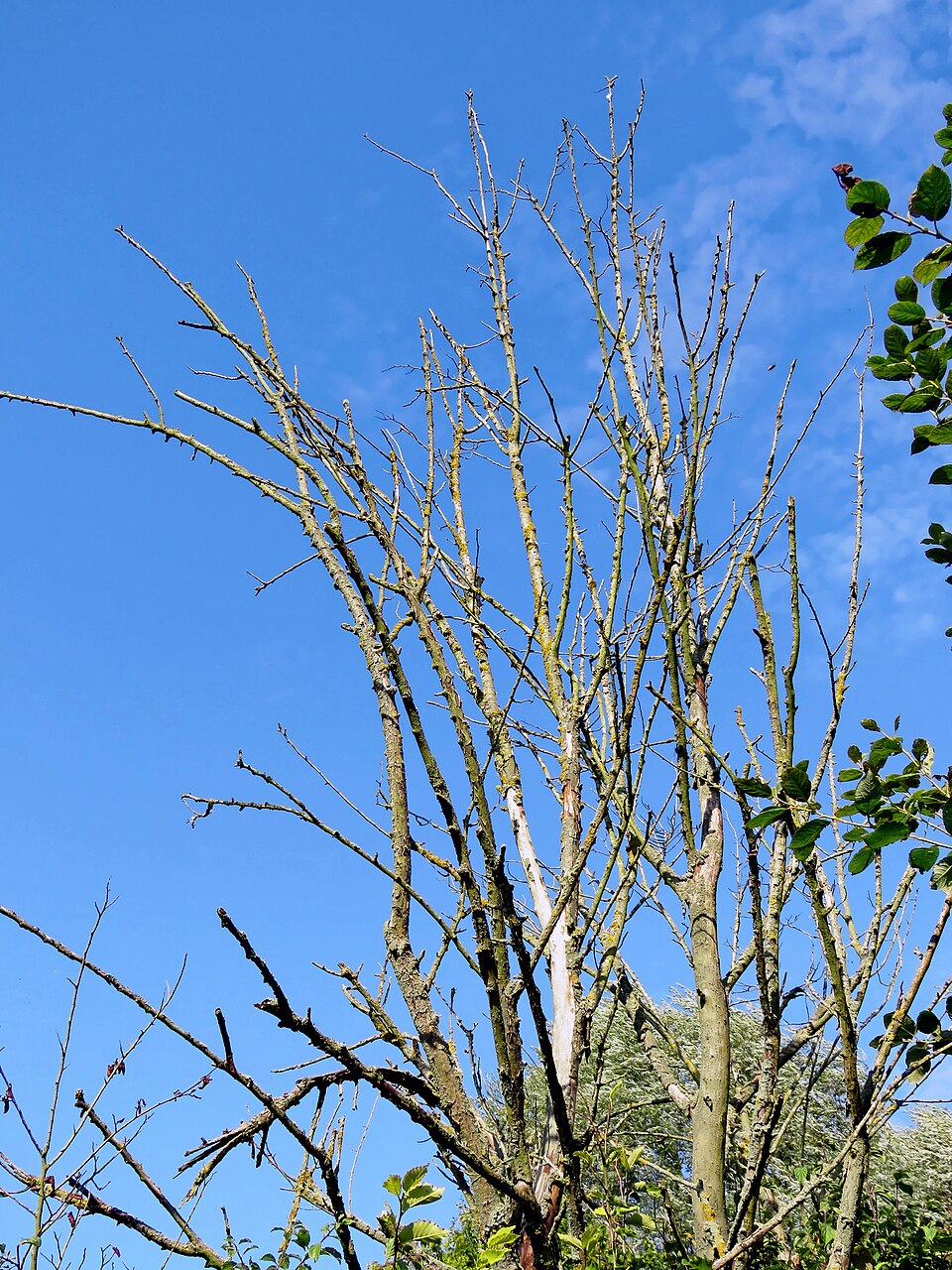
What shortens the interval is fairly predictable. Species and age come first, and ash is the clearest case in this region: a tree with dieback changes condition quickly and becomes unsafe to climb, which is why we handle it as ash dieback removal rather than as pruning. Then a change in what sits beneath the trees, particularly where the target becomes people rather than property. Then construction, drainage or level changes near a root system. Putting the inspections and the work they generate onto one schedule is what our commercial tree maintenance programmes are for.
What triggers an inspection outside the cycle
After a storm
Severe wind should trigger a check of the high-occupancy zones before people are let back onto them, not the following week. Look for limbs hung up in crowns, fresh cracks at unions and lifted soil on the windward side of root plates. What stayed airborne after the wind dropped is the hazard. What is already on the ground is fallen tree removal.
When something changes near the tree
Trenching, service runs, resurfacing, new hard standing, altered levels or drainage, anything that has cut roots inside the rooting area. Root damage often doesn’t show in the crown for a season or two, so the trigger is the works themselves, not the symptoms. A change of use counts as well. A field edge that now carries a footpath has moved zone without the tree doing anything at all.
When someone reports a defect
A caretaker, a resident or a passer-by tells you a branch is hanging. From that moment the report exists and is discoverable. Log it with a time and a name, act on it, and record what you found even if what you found was nothing.
What an inspection from us is and isn’t
It’s a visual condition inspection with the findings written up against the targets beneath the trees. Before appointment, we confirm the named inspector, their relevant qualifications and experience, and the agreed report contents. It isn’t an ecology or bat survey, and it isn’t a BS5837 development survey unless you commission that separately. Where a tree is protected by a Tree Preservation Order, the work arising needs consent, and work in a conservation area needs a section 211 notice with a six-week period to build into the programme.
We quote per site after an assessment. What moves the figure is the number of trees and whether they can sensibly be recorded as groups, the size of the site and how accessible it is, how much of the stock is mature, whether any individual tree needs climbing, the level of detail your insurer or tender requires, and whether this is a one-off baseline or a recurring cycle.
Commercial cover. NPTC and LANTRA qualified. Constructionline Gold certified. £10M public liability insurance. Site-specific RAMS and written completion reporting.
Common questions
- Who is responsible for inspecting trees on a commercial site?
- Whoever occupies and controls the land. Ownership matters less than control: if your organisation manages the site and can decide whether a branch comes off, the duty is yours. On a leased site it depends on the lease, so establish in writing who holds the trees before commissioning anything.
- How often should trees be inspected?
- No law sets an interval. It depends on what sits beneath the trees. Mature trees over playgrounds, car parks and public paths usually start on an annual formal inspection with your own walkover checks in between. Field boundaries and woodland with no route through can run on a longer cycle.
- Is a BS5837 survey the same as a tree safety inspection?
- No. A BS5837 survey grades trees by quality and retention value so a development can be designed around them. It describes value, not danger, and it won’t tell you whether a dead limb over your car park needs dealing with this month. If that report is all you hold, you have a planning document and no safety record.
- Do we have to carry out everything the report recommends?
- You either act on a recommendation or record a considered reason for not acting, with a date to review it. Deferring work on budget grounds is a decision you’re entitled to make. Leaving that decision undocumented is what causes the problem later, because a report that was commissioned and never opened proves you knew.
- What drives the cost of a tree safety inspection?
- The number of trees and whether they can be recorded as groups, the size of the site and how accessible it is, how much of the stock is mature, whether any tree needs climbing for close inspection, the level of detail your insurer or tender requires, and whether it’s a one-off baseline or a recurring cycle. We quote per site after an assessment.
Got a tree that needs work?
We review the situation. We give you a fixed quote. No hidden costs. What we quote, you pay.