
Tree Surgery for Housing Associations
Cyclical tree and hedge programmes for housing associations across County Durham and North Yorkshire. Resident notice, tree registers, per-scheme reporting.
Send the schemes, any existing tree register or survey, the tenure split and your reporting format. We’ll price the cycle and the reporting per scheme.
What our customers say
“I was recommended Ross to cut down and trim a large conifer hedge.”
“He came out quickly after getting in contact to assess what needed doing and provide a quote.”
“Very professional and educated me what was the best way to do the job.”
“He was quick, efficient and did a great job of clearing away.”
“Will definitely be using again and recommending to others.”
- NPTC qualified
- LANTRA qualified
- £10M public liability insurance
- Constructionline Gold certified
- RAMS as standard
Cyclical tree work for housing associations
A housing association programme isn’t a large domestic job. The unit of work is a scheme visit rather than a tree, and most of the difficulty sits in notice, tenure and records rather than in the cutting. We run cyclical tree and hedge programmes across County Durham, North Yorkshire and the Tees Valley for associations, ALMOs and their managing agents.
Send the scheme list, any existing register or survey, the tenure split per scheme and the reporting format your asset team uses. The general position on RAMS, insurance and site assessment is on our commercial tree maintenance page, so this page covers what is specific to social housing stock.
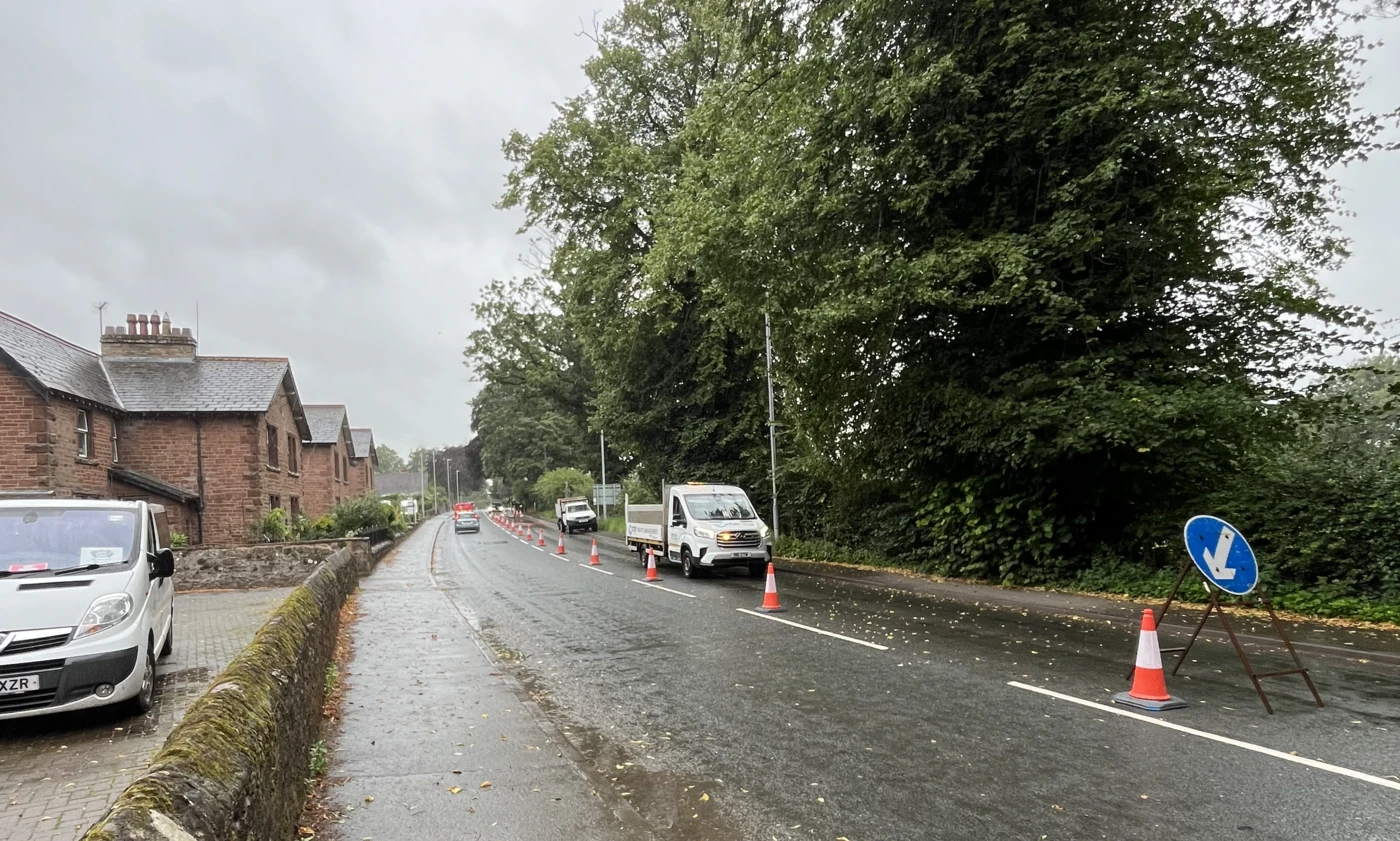
What a multi-scheme programme covers
- Cyclical tree work
- Deadwood, crown lifting off paths, parking and windows, reductions where the assessment supports them, and planned removals.
- Hedge and boundary cycles
- Communal hedges on a set number of cuts a year, sequenced around nesting checks. See hedge care.
- Inspection and defect recording
- A walkover per scheme against the register, defects raised at a priority. See tree safety inspections.
- Reactive and storm response
- Out-of-cycle attendance, priced as a separate line. See emergency tree work.
Building the cycle backwards from notice and consent
The six-week conservation area notice is a programme constraint
A lot of older social housing sits in conservation areas, where work to a tree needs a section 211 notice with a six-week period before it can proceed, and protected trees need consent. So a conservation-area scheme cannot share a cut window with an unprotected one unless the notices went in six weeks earlier. In practice the notices for the autumn round are drafted while the summer round is still being invoiced.
Notification residents will actually read
The tenancy agreement, not statute, usually sets the notice needed to enter a demised garden, and it is commonly 24 hours in writing, and working to that floor generates complaints. What works is a notice on the block door and the affected parking a clear week ahead, a letter or text naming the date, then a knock on the day. Parking is the recurring failure: a car in the drop zone stops the job, we can’t move it, and the visit is rebooked at your cost.
Where notification is a consultation rather than a letter
On mixed-tenure schemes with leaseholders paying a service charge, tree work can become a statutory consultation under section 20 of the Landlord and Tenant Act 1985. The statutory thresholds are low: consultation is triggered where any one leaseholder's contribution to the works would exceed £250, or £100 in an accounting period under an agreement running more than twelve months, which a multi-year grounds contract can be. The obligation is yours, not ours, but it sets when we can start, so flag which schemes carry leaseholders.
Communal grounds and demised gardens
The line between communal land and a demised garden decides who authorises the work as well as who pays. A tree in a demised garden is usually still the landlord's asset in the tenant's space, so it needs a maintenance decision and an access arrangement. A hedge between two demised gardens needs a decision about which side is cut, told to both households. Overhang onto a communal path is a scheme liability even though the tree isn’t on communal land.
Trees residents planted
A conifer put in a back garden twenty years ago now takes the light from three neighbours and lifts a shared fence. Whether it can be removed, recharged or refused is a tenancy question rather than an arboricultural one, and it wants answering before we quote. We record it against the register with the tenure noted, so the argument isn’t had again in two years. Where the complaint is about light rather than safety, our crown lifting page sets out what is realistically achievable.
The planned and reactive split
Why the reactive line is the one that hurts
A reactive job carries a whole mobilisation for one tree. There’s no batching and often no register entry, so somebody assesses on arrival. After a storm the same crews are called by every landlord in the patch inside 48 hours, and the schemes attended first are the ones with a named contact and an existing account. The way to shrink that line isn’t to buy reactive more cheaply. It’s to move work into the planned cycle: a hanger found on a walkover and dropped in ten minutes during a scheduled visit costs a fraction of the same limb after it has landed on a car.
The calls that aren’t defects
A large share of reactive calls on housing stock are nuisance rather than defect: light, leaves in a gutter, birds, fruit on a path, roots suspected under a worn path. Those don’t need a crew. They need an inspection record that already answers the question and a reply the housing officer can send. Trees also turn up inside damp and mould cases on older stock, and the tree work then inherits that case timescale.
Tree asset registers
A schedule listing trees at a scheme isn’t an asset register. A usable register gives every tree an ID and holds species, height class, stem diameter, plot location, tenure, protection status, target zone, condition, last inspection, next due date and every action taken. Tenure matters as much as species, because tenure decides who authorises the cut.
The register should be your asset in an exportable format, not a spreadsheet living with whoever holds the contract, because the value is continuity across contractors. And the inspection interval should be defensible per tree rather than per site, so a mature stem over a play area and a young whip in a rear garden aren’t on the same cycle. Where a formal survey is needed instead, see tree surveys.
Reporting per scheme, and the audit trail
Reporting has to be filed per scheme, because that’s how the rest of your records work and how a complaint arrives. Each visit leaves a completion note: what was inspected, what was done, what was raised, at what priority, and when it’s next due.
The part that matters when something goes wrong is the close-out. Liability sits in the gap between identifying a defect and acting on it, so a defect raised in March needs a dated record showing it was actioned, deferred with a reason, or reassessed. Where a complaint escalates to the Housing Ombudsman, the evidence that decides it’s usually the record of what was inspected, when, and what the resident was told.
What drives the price across a stock
We quote per scheme and per cycle after assessing the sites. The drivers are the number of schemes and how tightly they group into travel rounds; tree numbers, size and condition; how much work sits in demised gardens rather than communal land; parking and access; how many schemes carry protection or leaseholder consultation; and how much reporting depth you need.
What isn’t included
Grass cutting, litter picking, playground inspection, fencing and general grounds maintenance aren’t part of this. Ecology surveys, subsidence investigation and structural reports aren’t included. Stump grinding is quoted separately: see stump grinding. Work outside the agreed cycle is quoted as a separate reactive item.
Commercial cover. NPTC and LANTRA qualified. Constructionline Gold certified. £10M public liability insurance. Site-specific RAMS and written per-scheme completion reporting.
What customers ask
Common questions
How much notice do residents get before work starts?
The tenancy agreement sets the minimum for entering a demised garden, commonly 24 hours in writing. We work to a longer courtesy notice than that: notices on block doors and affected parking about a week ahead, a letter or text naming the date, then a knock on the day.
Who is responsible for a tree in a tenant's garden?
Usually the landlord as asset owner, in space the tenant occupies, so the work needs both a maintenance decision and an access arrangement. We record the tenure of the land each tree stands on so the authorising route is clear before a quote is issued.
Can you work from our existing tree register?
Yes. Send it in whatever format you hold it and we’ll quote against it. If there’s no register we can build one during the first cycle, set up as your exportable asset rather than something that stays with the contractor.
What happens if a car isn’t moved or access is refused?
The job stops. We can’t move a vehicle and we won’t work with a drop zone occupied, so the visit is rebooked and remobilised. That’s why parking notice goes out earlier than tenancy notice, and why refusals should reach us before the crew travels.
How do we bring the reactive spend down?
By moving work into the planned cycle rather than buying reactive attendance more cheaply. Defects found on a scheduled walkover are dealt with inside a visit that’s already paid for, and a good inspection record closes a large share of nuisance calls without sending a crew at all.
Send us the scheme list
Send the schemes, any existing tree register or survey, the tenure split and your reporting format. We’ll price the cycle and the reporting per scheme.