Crown Lifting
Crown lifting for clearance over footways, drives, roads and signage in County Durham and North Yorkshire. Highway headroom and BS 3998 limits explained.
Send the address, a photo from underneath the tree, and the height you need clear plus what it’s over. We’ll assess the tree and quote the cut heights in writing.
What our customers say
“I was recommended Ross to cut down and trim a large conifer hedge.”
“He came out quickly after getting in contact to assess what needed doing and provide a quote.”
“Very professional and educated me what was the best way to do the job.”
“He was quick, efficient and did a great job of clearing away.”
“Will definitely be using again and recommending to others.”
- NPTC qualified
- LANTRA qualified
- £10M public liability insurance
- BS3998 standard
Crown lifting for clearance over paths, roads and buildings
Crown lifting removes the lowest branches of a tree, and shortens others, to open up clear space underneath. It’s the operation you want when the tree itself is sound and the problem is what sits below it: a footway, a drive, a carriageway, a gutter, a traffic sign, a street light, a security camera, the sightline at a junction, or a mower that can’t get past.
Tell us the clearance you need and what it’s over. Two and a half metres above the footway. Enough height over the delivery bay for a curtainsider to turn. Clear of the sign at the site entrance. A height plus a target is a specification. "Tidy up the bottom" isn’t, and it’s how trees end up over-lifted. We do this work for homeowners, business parks, schools and highway frontages across County Durham, North Yorkshire and the Tees Valley.
What a lift includes
- Lower lateral branches
- Selected low limbs removed at the branch collar where their diameter and position make that the right call.
- Shortening instead of removing
- Where a low limb is large, we shorten it back to a suitable lateral rather than take it off the stem. Same clearance, much smaller wound.
- Measured cut heights
- Heights set against the surface below and checked with branches under summer leaf weight, not in their lighter bare-winter position.
- Signage, lighting and sightlines
- Growth taken clear of traffic signs, street lights, CCTV, security lighting and the visibility splay at an access.
How far a tree can be lifted
Lifting has a limit and it’s easy to go past it, because the work looks harmless. BS 3998:2010 warns against lifting so far that the crown becomes a small cap on a long bare stem, and the working check we use is that the depth of the remaining crown should stay at least around two thirds of the total height of the tree. Once you go beyond that you’ve changed the tree permanently, and the practical consequences follow.
Large wounds low on the stem
Lower branches are usually the oldest and the biggest on the tree. Taking one off at the stem leaves a wound of that diameter in the part of the trunk carrying everything above it, and on beech, birch, cherry or oak a wound that size may never close. That’s the main reason we shorten low limbs where we can instead of removing them outright.
Where the weight ends up
Strip the bottom out of a crown and the remaining sail sits higher up, on a longer lever. A heavily lifted tree can be less stable in wind, not more, and lifting is most often asked for on exposed roadside and car-park trees where that matters most. Lime answers a hard lift with a thicket of epicormic shoots up the trunk, so an over-lift on a lime buys you an annual job you didn’t have before.
Highways, footways and overhanging boundaries
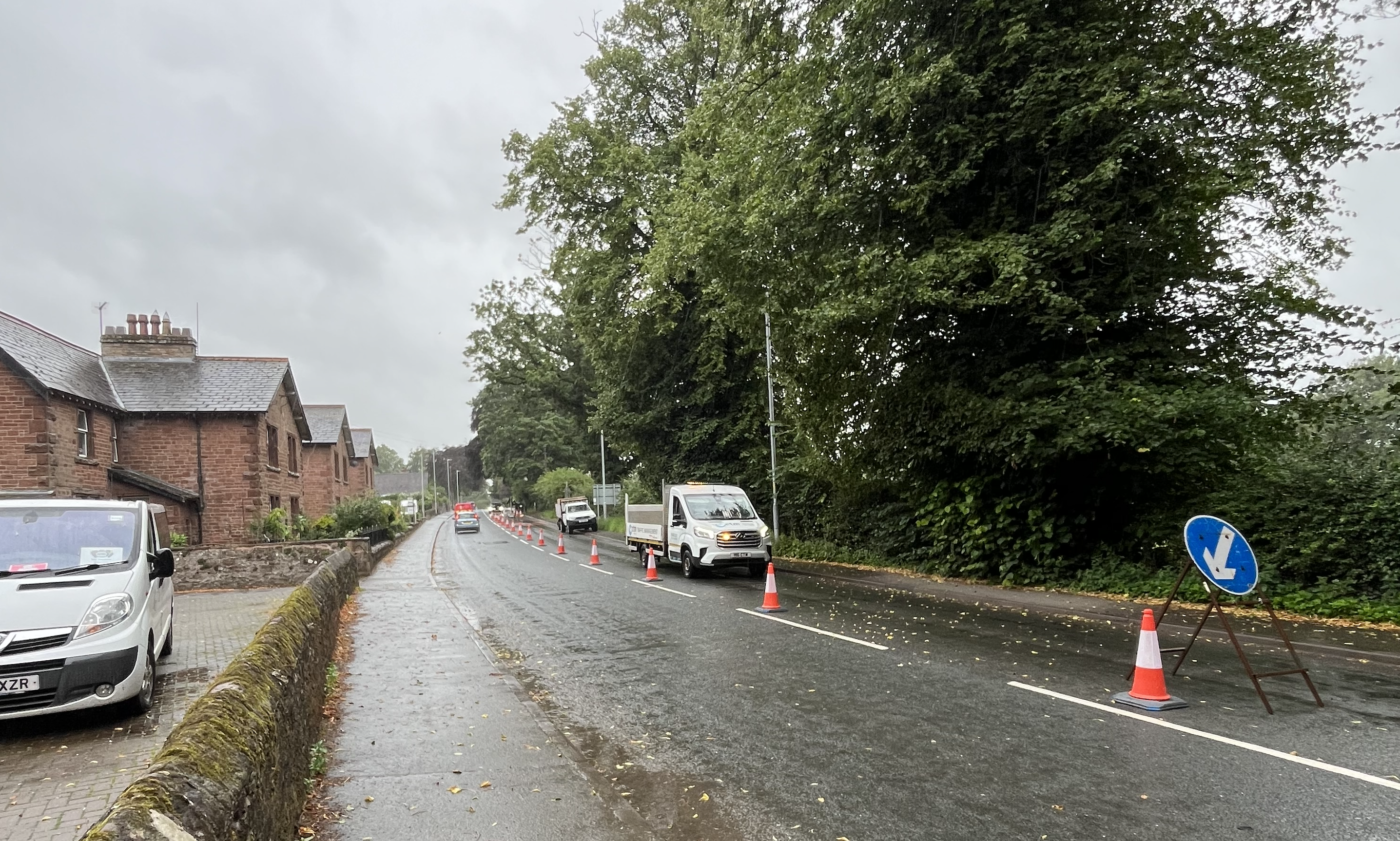
Where a tree on your land overhangs a public road or footpath, the highway authority can serve notice under section 154 of the Highways Act 1980 requiring the owner or occupier to cut it back. The grounds include obstructing the passage of vehicles or pedestrians and obscuring a traffic sign or the light from a street lamp. Most authorities work to around 5.2 metres of headroom over a carriageway and around 2.5 metres over a footway, but the figure your own authority uses is the one that counts, so we ask for it before setting cut heights.
Branches coming over the boundary
If the branches come from next door, you’re generally entitled to cut back to the boundary line and no further, and the cut material belongs to the tree owner, so it should be offered back rather than tipped over the fence. That entitlement doesn’t override a Tree Preservation Order. A street tree standing in the verge is the council's tree, and we won’t touch one unless the authority instructs the work.
Business parks, car parks and site access
Most of our lifting work is commercial. On a business park it’s wing-mirror and box-van damage along an access road, a pedestrian route that fails an insurer walk-round, an HGV swept path into a service yard, leaf litter dropping onto a fire escape route, or CCTV and lighting columns looking into a canopy instead of at the car park. On construction sites it’s getting plant through a gate and under a crown without damaging the tree that a planning condition says stays.
Working around a live site
Visits are scheduled around the site: out of hours, weekends, or between deliveries, with exclusion zones, banking and any traffic management agreed in advance. The RAMS, insurance and completion reporting arrangements are set out on our commercial tree surgery and commercial tree maintenance pages rather than repeated here. On managed sites, lifting is usually one line in a wider cycle rather than a single visit.
Protected trees and nesting birds
Lifting a tree with a Tree Preservation Order needs consent, and a tree in a conservation area needs a section 211 notice with a six-week period before work starts. We check the address and the proposed cut heights before booking. Nesting is the constraint people forget on this particular job: low branches over paths and car parks are prime nesting habitat, and they’re exactly what gets requested in June. The Wildlife and Countryside Act 1981 makes it an offence to damage or destroy an active nest while it is in use or being built, so we check before cutting and reschedule if we find one.
What drives the price
We quote per job or per site after an assessment. The figure follows the number of trees along the frontage, tree size and limb diameter, the clearance asked for, whether the work is climbed or reached from a machine, whether it’s over a live road or footway and what control that needs, out-of-hours working, and brash volume with somewhere for a chipper to stand. A run of trees along one boundary costs less per tree than a single tree on its own.
What isn’t included
A lift doesn’t make the tree smaller and it doesn’t open a dense canopy up: those are crown reduction and crown thinning, and the pruning options overall are set out on our tree pruning page. Felling and stump work are quoted through tree removal and stump grinding. Brambles, self-set scrub and ground vegetation along a boundary sit under vegetation management or site clearance. Recurring clearance visits are arranged through tree maintenance. Formal traffic management, permits and licences are priced separately where the authority requires them. Work on a council-owned tree, or on a protected tree without consent, isn’t included.
Commercial cover. NPTC and LANTRA qualified. Constructionline Gold certified. £10M public liability insurance. Site-specific RAMS, agreed exclusion zones and written completion reporting.
What customers ask
Common questions
How much clearance is needed over a road or footpath?
Highway authorities commonly work to around 5.2 metres of headroom over a carriageway and around 2.5 metres over a footway, but figures vary, so we confirm the standard your authority applies before setting cut heights. Over a private drive the clearance is whatever the vehicles using it need.
Can I cut back branches that overhang from next door?
Generally you can cut back to the boundary line and no further, and the cut material belongs to the tree owner, so it should be offered back rather than tipped over the fence. If the tree is protected by a Tree Preservation Order, consent is still needed first.
Can crown lifting damage a tree?
An over-lift can. Removing large lower limbs at the stem leaves wounds that may never close, and stripping the bottom of the crown moves the wind load higher up a longer lever. We keep the remaining crown depth to roughly two thirds of the tree height and shorten low limbs rather than remove them where we can.
Can you lift trees over a live road or car park?
Yes, with the controls agreed first. That means exclusion zones, signage and cones, banking, and formal traffic management or a permit where the highway authority requires it. On commercial sites we work out of hours or between deliveries where that suits the operation better.
Is lifting enough, or do I also need a reduction?
Lifting solves clearance underneath. If the tree is also too tall or too wide for its position, or the canopy is too dense for the light you want, that’s a reduction or a thin as well. We set out which operations the tree actually needs at the assessment, and you can take them in stages.
Tell us the clearance you need
Send the address, a photo from underneath the tree, and the height you need clear plus what it’s over. We’ll assess the tree and quote the cut heights in writing.