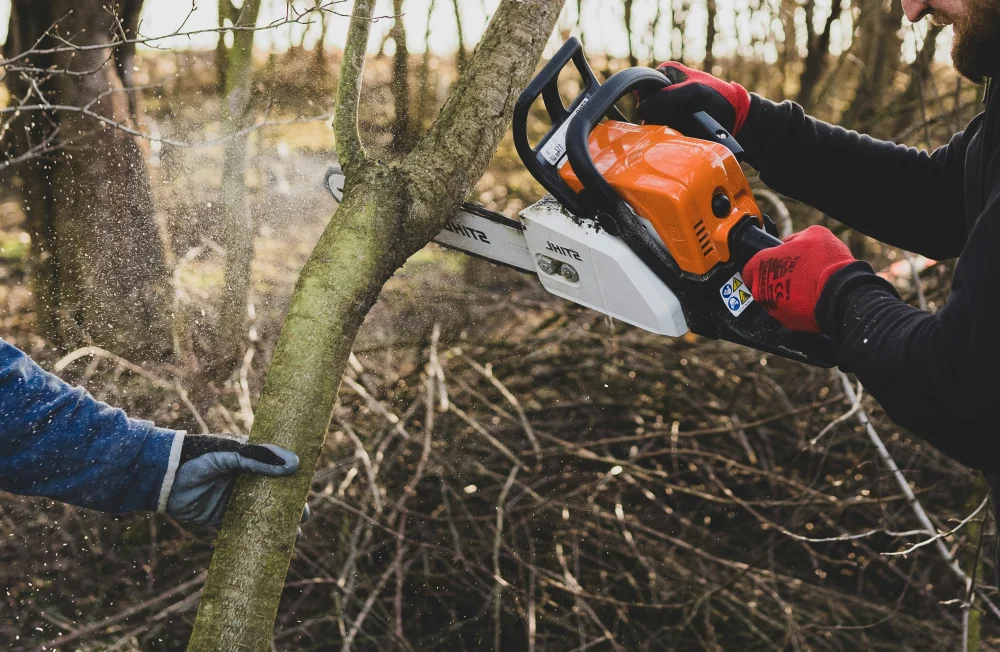
Vegetation clearance looks simple. A site full of trees, scrub and brambles, and a machine to cut it down. It isn’t simple. The jobs that go wrong are the ones where nobody checked what was under the ground, what was living in the vegetation, or what the site would be used for afterwards.
This guide covers the risks that cause delays, extra cost and stoppages on vegetation clearance jobs, and how we plan around them before machinery arrives.
What goes wrong on vegetation clearance jobs
The failures follow a pattern. Most of them come from work starting before the site has been checked.
- Underground services get damaged. Gas, water, electric and fibre lines run under most sites. A tracked machine or a stump grinder can hit one in seconds.
- Soil erodes. Vegetation holds ground together. Remove it and heavy rain can move soil off the site and into drains and watercourses.
- Drainage changes. Water that used to soak into tree roots now runs across the surface, causing standing water and flooding.
- Wildlife is disturbed. Trees and scrub hold nesting birds, roosting bats and other protected species. Disturbing them stops the job, sometimes with legal consequences.
- Permissions are missed. TPOs, Conservation Areas, planning conditions and waste rules all apply. Missing one can stop work mid-job.
- Safety is compromised. Cutting, machinery and unstable trees or stumps put workers and the public at risk if the work area isn’t controlled.
- Costs climb. Damaged services, environmental mitigation and delays all add cost. The work looked cheap until the site turned out to be complicated.
The risks that are easy to miss
Some risks only appear once the vegetation is gone.
Soil erosion and ground stability. Established roots hold slopes and banks together. Clear them and the ground can slump, especially on a slope or near a watercourse. Erosion controls and timing the work around weather matter more than people expect.
Changes to drainage. The water table and surface water behave differently without vegetation. Sediment can run into drains and ditches, which is a problem for the site and for neighbours.
Underground utilities. We don’t dig or grind blind. Service drawings tell us where gas, water, electric and fibre run. Where drawings are missing, we work to cautious assumptions and adjust the method.
Noise and dust. Chippers, grinders and tracked machines are loud. On a site near houses or businesses, noise and dust need managing as part of the programme, not discovered when someone complains.
Protected species. A nest in use or being built stops work on that tree, whatever the month. Nesting is most likely between March and August, so a spring start carries more programme risk. A bat roost requires a licensed surveyor. If the site has either, the programme shifts. It’s better to find out before the machine arrives than after work stops.
What we check before we start
Before any cutting, we work through the site with the developer or landowner.
- Service drawings. Underground and overhead services identified before plant arrives.
- Ecology. Nesting bird and bat constraints checked. Surveys arranged where the site needs them.
- Permissions. TPO and Conservation Area checks done, paperwork handled.
- Access and ground conditions. What the machines can carry, where the arisings go, and whether the ground will take the weight.
- Drainage and erosion. Where water flows, what protects it, and what controls go in during the work.
- Safety. Exclusion zones, traffic management where needed, and a site-specific risk assessment and method statement.
This is the difference between clearance and controlled site preparation. The same machine does the same cutting. The planning is what stops the job going wrong.
How the work is planned around the site
Clearance isn’t an isolated task. It sits inside the development programme, and the plan has to fit both the site and the work around it.
We adapt the method to the site: tracked machines where ground is soft, hand work where access is tight, exclusion zones where the public can get near. Where erosion is a risk, controls go in with the work, not after it.
When the site has ecological constraints, we work around them. That can mean timing the clearance for the right season, leaving buffer areas, or bringing in an ecologist where the site requires it.
After the clearance, the site needs managing. Regrowth comes back fast if nothing checks it. Invasive species, drainage and erosion all need watching. Regular inspections after the machinery leaves keep the site ready for the next stage.
What affects the cost
Clearance is quoted per site. The price depends on the area, what is growing on it, the access, and what has to happen to the arisings. Most of the cost surprises come from work that starts before the site is understood: a gas main hit by a grinder, an active nest that stops work on that tree until the birds have finished, or a slope that erodes and has to be stabilised. We quote from a site visit and a written spec, so the price you get is the price you pay.
What to expect from a clearance contractor
Whoever does the work, the plan should cover the same ground: services identified, ecology checked, permissions handled, method statement in place, and a written programme agreed before cutting starts. If a contractor is ready to start without those, the site hasn’t been checked.
See also: Site clearance for construction, the practical sequence when trees come out before building starts. And After the BS5837 tree survey, how the survey drives the work.
Common questions
- What are the main risks of vegetation clearance?
- Damaged underground services, soil erosion, drainage changes, wildlife disturbance, missed permissions and safety incidents. Most come from starting before the site has been checked. A proper site assessment before machinery arrives prevents the majority of them.
- Do you check for underground services before clearance?
- Yes. We identify gas, water, electric and fibre lines before plant arrives. Where service drawings are missing, we work to cautious assumptions and adjust the method.
- When can vegetation clearance take place?
- Most clearance runs through the year, but a nest in use or being built stops work on that tree, whatever the month, and a bat roost needs a licensed surveyor. We check ecology before quoting and plan the programme around it.
- Do I need permission for vegetation clearance?
- Trees can be protected by TPOs or Conservation Areas, and sites can have planning conditions. We check what applies and handle the paperwork before work starts.
- What happens to the site after clearance?
- We remove the waste and leave the site clean. Regrowth and erosion need watching after the machinery leaves. We advise on what to monitor and can return for ongoing vegetation control.
- How much does vegetation clearance cost?
- It depends on the area, what is growing on it, the access and what happens to the arisings. We give a written quote after a site visit. No hidden costs.
Got a tree that needs work?
We review the situation. We give you a fixed quote. No hidden costs. What we quote, you pay.