
Tree Surgery for Property Managers
Tree surgery for block and estate managers across County Durham and North Yorkshire: section 20 ready quotes, service charge timing and resident evidence.
Send the address and a brief outline of the work. Include a tree schedule or survey if you have one. We’ll assess the site and provide an itemised quote, with RAMS and insurance details.
What our customers say
“I was recommended Ross to cut down and trim a large conifer hedge.”
“He came out quickly after getting in contact to assess what needed doing and provide a quote.”
“Very professional and educated me what was the best way to do the job.”
“He was quick, efficient and did a great job of clearing away.”
“Will definitely be using again and recommending to others.”
- NPTC qualified
- LANTRA qualified
- £10M public liability insurance
- Constructionline Gold certified
- RAMS as standard
Tree surgery for property managers, blocks and estates
Managing agents and resident management companies don’t buy tree work the way a homeowner does. The money belongs to other people, the decision has to be defensible, and a statutory consultation process sits between the quote and the start date. We work on blocks and managed estates across County Durham, Darlington and North Yorkshire.
What helps most is a quote that survives circulation to every leaseholder: itemised by tree, with reasons, exclusions and duration on the face of it. General arrangements are on our commercial tree surgery page, cyclical work on tree maintenance programmes.
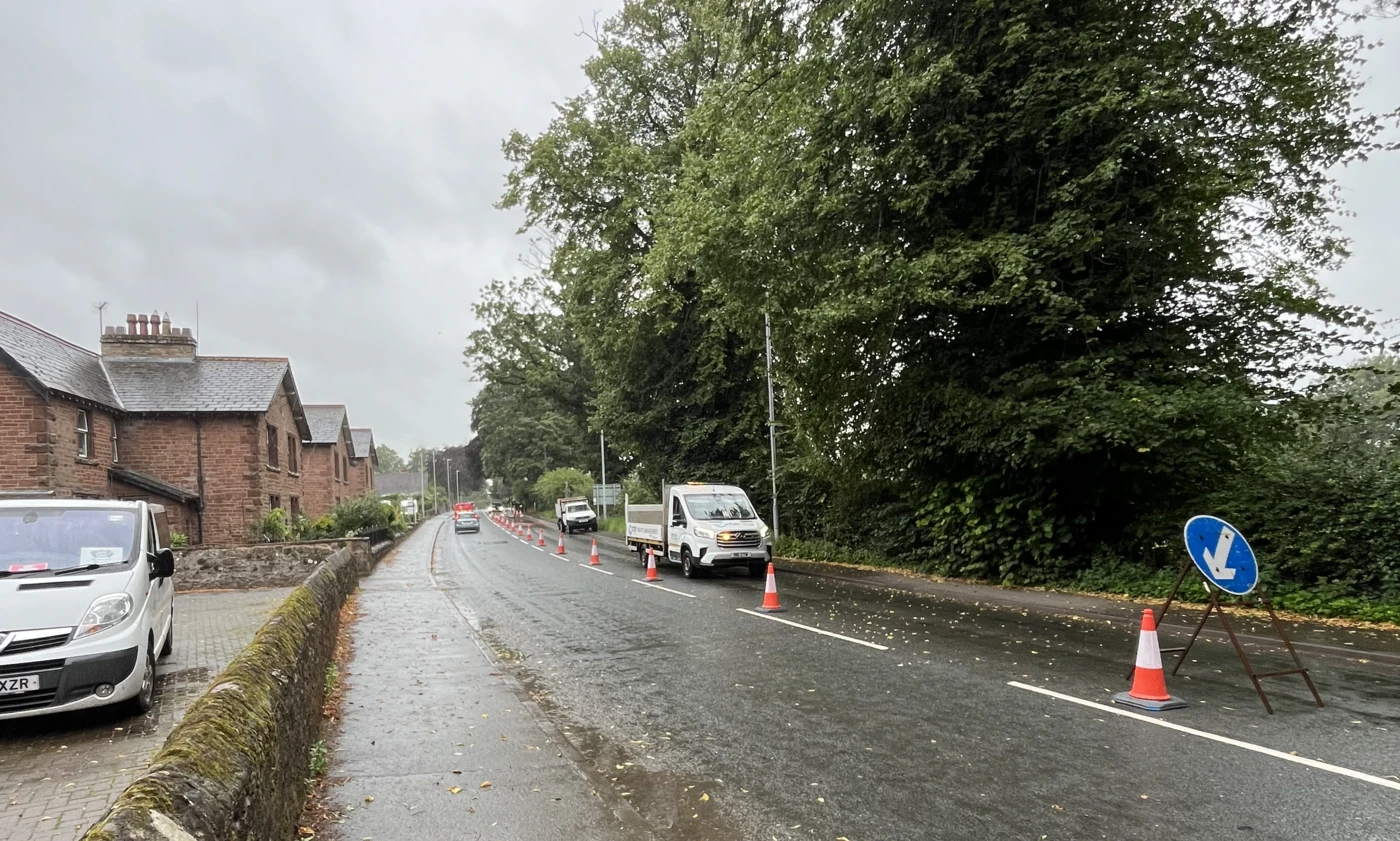
What we quote on a block or estate
- Communal grounds trees
- Reduction, thinning, crown lifting and deadwood removal, priced tree by tree so every line traces back to a reason. See tree pruning.
- Boundary and neighbour issues
- Overhang across a boundary, limbs above a neighbouring garage, and the screen between the block and the road. See hedge care.
- Car park, bin store and lighting clearance
- Clearance off parking bays, bin store access, bollard lighting, CCTV lines and the fire brigade route.
- Removals and make safe
- Removal where retention can’t be justified, and out of hours make safe after a storm. See tree removal.
Section 20 consultation, and the quote that has to survive it
For residential leaseholders paying a variable service charge in England and Wales, section 20 of the Landlord and Tenant Act 1985 requires consultation on qualifying works where any one leaseholder would contribute more than £250 in a year. The notices carry observation periods of at least 30 days each, and the landlord must hold at least two estimates, one from a contractor unconnected to the landlord.
Where a maintenance programme sits
A cyclical tree contract running longer than twelve months is a different animal. It can be a qualifying long term agreement, and the threshold for those is a leaseholder contribution of more than £100 a year. Worth checking before signing a three year programme.
Making two estimates genuinely comparable
We’re frequently the second estimate, and the pair is often useless because the two quotes describe different work. Send us the scope you sent the other contractor, or the survey you’re both pricing, and you get a like for like comparison instead of two numbers. Urgent make safe work cannot wait for notices; for that we give you a dated record of the defect with photographs. See emergency tree work.
Working with the service charge year, not against it
The calendar runs backwards from the start of your service charge year: budget line, consultation, then works. Two sets of 30 day observation periods means the notices alone can absorb two months, so a quote obtained in the spring the work is wanted is usually a quote for next year.
Get the inspection done in autumn
Autumn is when an inspection is most useful to a budget. Crowns are still readable, summer defects are still visible, and you get costed recommendations in time for the draft budget. A tree survey gives you the schedule to build from, and our article on tree safety inspections covers what it should look at.
Where the bird nesting season lands
Consultation that completes in April or May pushes the work into the nesting season. The Wildlife and Countryside Act 1981 makes it an offence to damage or destroy an active nest while it is in use or being built, and dense crowns and boundary hedges are where nests are. Consult over winter and the works land in late summer and autumn, when the ground carries machinery better.
The evidence pack residents ask for
Residents rarely object to tree work in principle. They object to being told a mature tree is coming down without being shown why. The pack that settles it is short: a dated inspection with a recommendation per tree, photographs of the defect, the qualifications of whoever assessed it, the insurance schedule, the RAMS, and any consent that applies.
Where a tree carries a Tree Preservation Order or stands in a conservation area, put the consent or the notice in the pack: conservation area work needs a section 211 notice and a six week period before anything starts, and somebody will check. Answer the replanting question in the same pack, because it’s the first thing asked after a removal.
Communal grounds: bays, bin stores and the one lawn everybody sees
A block has nobody on site to let us in. We need the gate code or fob arrangement, a named contact reachable on the day, and to know which bays are allocated and to whom, because a blocked allocated bay produces a complaint that outlives the job. Notify bay holders by bay number.
Bin collection day and the fire brigade access route can’t be obstructed. Communal lawns often have soakaways, private drainage and lighting cable under them, and that lawn is the only green space residents have. If it will rut we work off the hard standing and carry material out. Ruts get raised at the next AGM long after the tree is forgotten.
The resident who objects
There’s usually one: the leaseholder whose window the tree shades, or the one who values it most. Put the reasoning in writing so you can circulate it unedited. Be exact about what will change: a reduction of a stated extent isn’t the removal people assume, and our article on crown reduction versus topping is worth forwarding. Then offer the smaller intervention where it solves the problem, such as lifting a crown clear of a parking bay instead of felling.
Light, hedges and what a complaint can actually achieve
A leaseholder asking for light back is often told the hedge can be made to go. It can’t. The High Hedges provisions in Part 8 of the Anti-social Behaviour Act 2003, England and Wales, concern a line of two or more mostly evergreen trees or shrubs over two metres acting as a barrier to light or access. A remedial notice cannot require reduction below two metres, and cannot require removal of the hedge. The realistic outcome is a managed height, which is what a trimming cycle delivers.
What we don’t do
We don’t carry out grounds maintenance, grass cutting, fencing, drainage or ecology surveys, and we don’t act as your consultant in a dispute. Formal survey work is quoted separately as a tree survey.
What drives the price on a block
We quote per site after an assessment and publish no figures. What moves it: the number of trees, their size and condition, how much work sits above parking or a building, chipper access and where the tipper stands, whether bays or a road need closing, whether the ground takes machinery, protected tree consents, and whether the job runs in one visit or is staged across two budget years.
Commercial cover. NPTC and LANTRA qualified. Constructionline Gold certified. £10M public liability insurance. Site-specific RAMS and written completion reporting.
What customers ask
Common questions
Will your quote stand up to leaseholder scrutiny?
That’s what it’s written for. Each tree is named and priced with the reason for the work, exclusions are on the face of the quote, and duration and access requirements are stated. RAMS and the insurance schedule come with it, so the whole thing can be forwarded without editing.
When should we get tree work priced for next year?
Autumn. An inspection then gives costed recommendations in time for the draft budget, and consulting over the winter means the works land in late summer or autumn rather than in the bird nesting season.
Can you start before section 20 consultation finishes?
That’s a decision for the landlord or agent, not for us. Planned works normally wait for the notice periods. For genuinely urgent make safe work we attend and give you a dated record with photographs of why it couldn’t wait.
A leaseholder says the communal hedge must be cut down. Can it be?
Not through the High Hedges route. A remedial notice under Part 8 of the Anti-social Behaviour Act 2003 in England and Wales cannot require a hedge to be reduced below two metres and cannot require its removal. The realistic outcome is an agreed height maintained on a cycle.
Do you work on trees with a Tree Preservation Order?
Yes, by the correct route. We check the address and the proposed work, then apply for consent, or serve a section 211 notice where the trees are in a conservation area, which carries a six week period. Build that time in before you promise residents a date.
Get a quote you can circulate
Send the address and a brief outline of the work. Include a tree schedule or survey if you have one. We’ll assess the site and provide an itemised quote, with RAMS and insurance details.