
Tree Surgery for Golf Courses
Tree work on golf courses in County Durham and North Yorkshire: green shade and airflow, turf protection, irrigation avoidance and out of play windows.
Send the club location, the holes involved and any tree schedule or irrigation plan you hold. We’ll walk it with your course manager and quote in writing with RAMS.
What our customers say
“I was recommended Ross to cut down and trim a large conifer hedge.”
“He came out quickly after getting in contact to assess what needed doing and provide a quote.”
“Very professional and educated me what was the best way to do the job.”
“He was quick, efficient and did a great job of clearing away.”
“Will definitely be using again and recommending to others.”
- NPTC qualified
- LANTRA qualified
- £10M public liability insurance
- Constructionline Gold certified
- RAMS as standard
Tree surgery for golf courses in County Durham and North Yorkshire
On a golf course the trees are part of the design and part of the agronomy, and the surfaces underneath cost more to repair than the tree work costs to do. We work on courses across County Durham, Darlington and North Yorkshire.
The person to walk the course with us is the head greenkeeper, who knows where the irrigation runs, which bridges take a machine and which holes can come out of play. See our commercial tree surgery page.
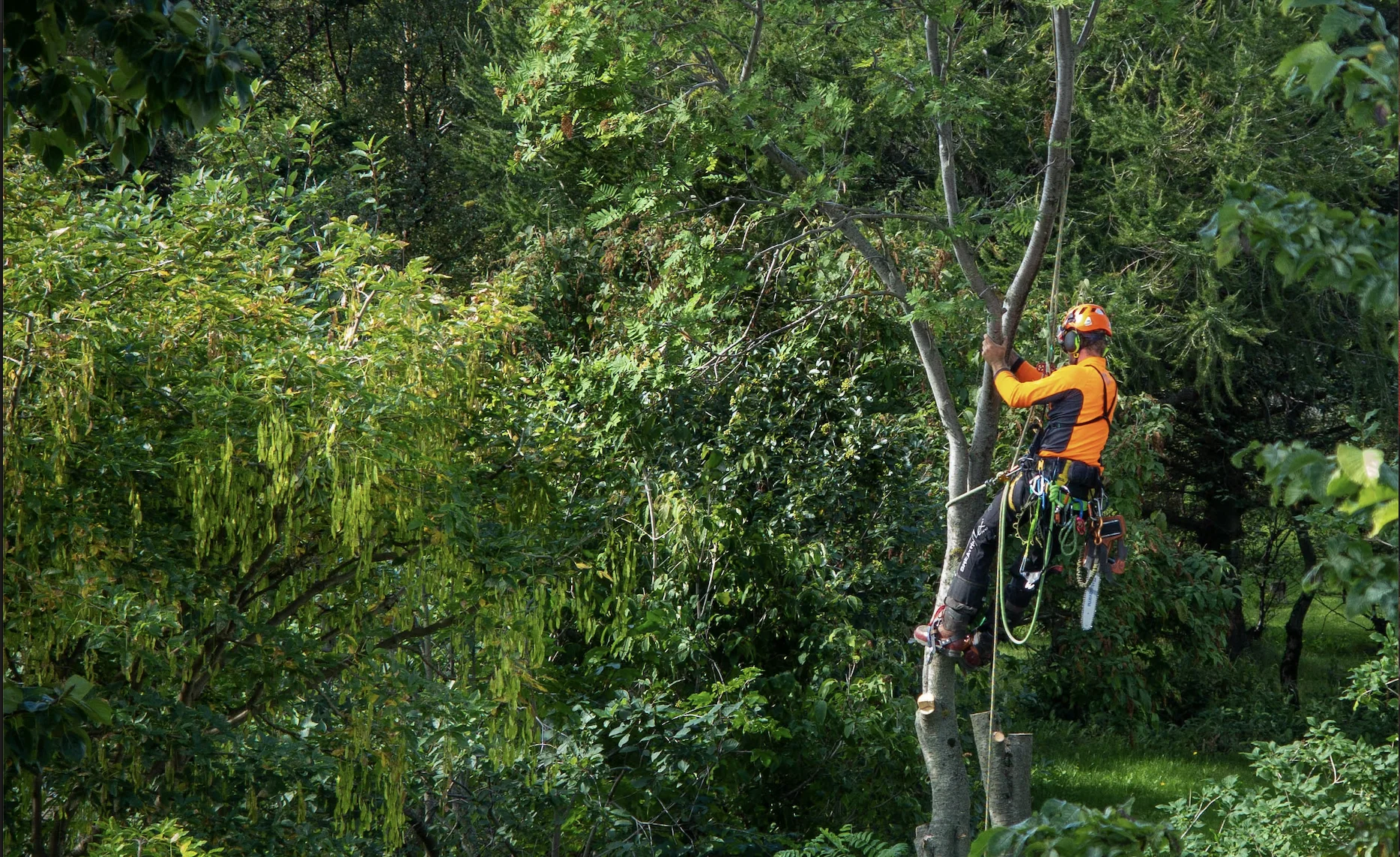
What we take on around a course
- Shade and airflow work on green surrounds
- Reduction, thinning and crown lifting to get morning light and air movement back onto a green. See tree pruning.
- Boundary tree lines
- The screen that keeps sliced balls on the property: usually holding height, not reducing it. See hedge care.
- Dead and storm damaged parkland trees
- Sectional dismantling, deadwood over paths and tees, storm response. See tree removal and emergency tree work.
- Ditch lines and out of play scrub
- Self seeded regrowth closing in on a line of play. See vegetation management.
Shade, airflow and what closely mown turf actually needs
A green mown at a few millimetres has little leaf area and must make its own carbohydrate from the light it gets. Shade it and you get thin drawn growth, a shallow root system and a surface that thins through winter. Shade also favours annual meadow grass and moss over the bents and fescues the green was built for.
Morning shade costs far more than afternoon shade
Morning sun burns the dew off and gets photosynthesis going early. A tree on the east or south east side of a green takes exactly that away, so it does more damage than a larger tree on the north side, which throws its shadow off the surface. If a club can only afford one removal, that’s the tree, and rarely the one members complain about.
The midwinter sun barely gets off the ground up here
At this latitude the midwinter sun sits only around twelve degrees above the horizon at midday, so a ten metre tree throws a shadow of roughly forty five metres. It’s why a green that looks fine in July sits in shade all winter and comes out of spring thin. Assess shade in December, not midsummer.
Still air, leaf wetness and disease pressure
A ring of trees around a green blocks air as well as light. A surface that stays wet longer carries more disease pressure, and microdochium patch, which most people still call fusarium, is what turns up on a soft damp green here. Thinning a belt to get air moving through it’s often more useful, and less contentious, than felling.
Root competition in the green surround
The dry thin band of turf on the tree side of a surround is usually root competition, not shade: tree roots work the same top few hundred millimetres the turf does, and they win. A root pruned trench with a vertical barrier can hold the line, but severing roots on the windward side of a mature tree reduces its anchorage, so which side matters as much as how deep.
Getting to the tree without marking the course
No machine crosses a green or its collar, and that isn’t negotiable. Everything else is a route the course manager agrees: cart paths and rough where possible, boards or mats to cross a fairway when wet, and no turning on the spot, because turning shears turf rather than compressing it. Tracked plant spreads load better than wheels and still tears a surround on a pivot.
Bunkers, bridges and course furniture
Chip and sawdust blown into a bunker contaminate the sand and change how it plays, and the fix is replacing sand, not raking it. We sheet bunkers or set the chipper downwind. Check the load limit on every ditch bridge before a tracked machine crosses. Tee markers, benches, bins and yardage plates come out first and go back where they were.
Irrigation heads and buried pipework
Greens and tees are full of pop up heads, valve boxes and lateral pipework that often sits only a few hundred millimetres down. A stump grinder through a lateral or the ring main takes irrigation off line in the growing season, a far more expensive day than the stump was. We work from the as laid plan, with heads and lines marked by your team before grinding. See stump grinding.
Ball strike, and why ear defenders change the plan
A struck ball arrives with no useful warning, and a crew in hearing protection can’t hear a shout. That removes the audible warning everyone on a course relies on, so the control has to be the hole, not the noise. We work the hole closed, or behind the field with a marshal, or when the course is shut. It runs both ways: a group playing through while a climber is aloft is our hazard too.
Sightlines are the club decision, not ours
A tree grown into the line of play changes the hole the architect drew, and somebody on the committee will hold a firm view. We say what the tree can take and what a reduction looks like in two years, then price what the club decides. Removing a tree that frames a green is more contentious than removing one that shades it.
The working windows that actually exist
A UK course is open all year, so the windows are narrow. Out of season between October and March is the obvious one. The best window is a frost closure: the course is empty and the ground is frozen hard enough to carry a machine without rutting. It can’t be booked, so agree scope, RAMS and access now and we’ll hold it for the call.
Consents outlast the window
Many courses here are laid over old estate parkland, where the trees are most likely to be protected. Work to a tree with a Tree Preservation Order needs consent, and work in a conservation area needs a section 211 notice with a six week period before anything starts. Six weeks outlasts most frost spells, so serve the notice in autumn for a winter job.
What we don’t do
We don’t carry out greenkeeping, drainage, irrigation repair or course architecture, and we don’t decide a line of play. Survey work is quoted separately as a tree survey, and a whole course on an inspection cycle is a tree maintenance programme. See tree safety inspections.
What drives the price on a course
We quote per site after walking the course and publish no figures. What moves it: how many trees and their condition, how far material travels, ground conditions on the day, whether a machine can go near the surface at all, how the hole comes out of play, and bunker and irrigation protection.
Commercial cover. NPTC and LANTRA qualified. Constructionline Gold certified. £10M public liability insurance. Site-specific RAMS and written completion reporting.
What customers ask
Common questions
Can you work while the course is open?
Sometimes, on a single tree, behind the field and with a marshal. Anything involving a rope, a drop zone across a fairway or a machine on the turf needs the hole out of play. A crew in hearing protection can’t rely on a shouted warning, so the hole is the control.
Will your machines damage the greens or fairways?
Nothing crosses a green or its collar. Fairway crossings follow a route the course manager agrees, on boards or mats when wet, with no turning on the spot. Where the ground won’t carry a machine we hand carry material out to a track instead.
If the budget only covers one tree, which should come out?
Usually the one on the east or south east side of a green. It takes the morning sun that dries the dew and starts photosynthesis, so it costs the turf more than a larger tree on the north side. Assess the shade in midwinter when the sun is low.
When is the best time of year for course tree work?
October to March, and best of all during a frost closure, when the course is empty and the ground is frozen hard enough to carry a machine without rutting. Frost can’t be booked, so agree the scope and access in advance and we’ll hold it for the call.
How do you protect the irrigation system when grinding stumps?
We work from the as laid irrigation plan, with heads, valve boxes and lateral runs marked on the ground by your team before grinding starts. Laterals can sit only a few hundred millimetres down, and a broken main in the growing season costs far more than the stump.
Walk the course with us
Send the club location, the holes involved and any tree schedule or irrigation plan you hold. We’ll walk it with your course manager and quote in writing with RAMS.